Credits
Date of publication: November 2026
Australian Capital Territory
ISSN2208–5335
Subject to acknowledgement, noting the ACT Judicial Council as author, extracts may be copied without the publisher’s permission.
Produced by the ACT Judicial Council, Canberra.
Design: Typeyard Design and Advertising Pty Ltd
Acknowledgement of Country
We acknowledge the traditional custodians of the lands and waters of the ACT and recognise any other people or families with connection to the lands of the ACT and region. We acknowledge and respect their continuing culture and the contribution they make to the life of this city and this region.
Contacting the ACT Judicial Council
Enquiries about this report or requests for other information should be directed to:
The Principal Officer
ACT Judicial Council
Post: GPO Box 1884, CANBERRA ACT 2601
Telephone: 02 5119 5550
Email: principal.officer@actjudicialcouncil.org.au
Website: actjudicialcouncil.org.au
Contents
Welcome
Chief Justice Lucy McCallum, Head of Council

In 2025–26, the Council received 19 complaints, 18 of which were from members of the public and one from a legal practitioner on behalf of their client.
The Australian Capital Territory (ACT) Judicial Council (the Council) was established on 1 February 2017 and provides a formal mechanism to consider complaints about the behaviour or capacity of a judge of the ACT Supreme Court or a magistrate of the ACT Magistrates Court. Anyone may make a complaint to the Council about the conduct of a judicial officer. Complaints raise important matters of concern for the Council’s consideration, and the Council’s complaint-handling role contributes to a fair and accountable judiciary for the ACT.
In 2025–26, the Council received 19 complaints, 18 of which were from members of the public and one from a legal practitioner on behalf of their client. While this reflects the highest number of complaints received by the Council, this increase in part can be attributed to an increase in a small number of complainants making multiple complaints about different judicial officers.
The Council has seen a change in membership this year. We farewelled Chief Magistrate Lorraine Walker, and I thank her for her dedication to the role from the inception of the Council in 2017 until retirement in March 2026 this year. The Council welcomed Chief Magistrate Louise Taylor in April 2026. We also welcomed the re-appointment of Mr Philip Walker SC as the legal member on
1 February 2026 and the appointment of Mr Rodney Lee Walsh as community member on 1 August 2025. Both were appointed for a term of 3 years. I thank all the members for their contribution this year.
In addition, I also wish to acknowledge the work of the Principal Officer, Mr Iain Anderson, and his staff in supporting the Council in the performance of its functions and acknowledge Ms Jennifer Furze, who supported the Principal Officer of the Judicial Council from February 2020 until October 2025.
Council Overview
The Council is established by operation of Part 2A of the Judicial Commissions Act 1994 (ACT) (the Act) and consists of the Chief Justice of
the ACT Supreme Court, the Chief Magistrate of the ACT Magistrates Court, an appointed legal practitioner and an appointed member of the community.
The Council is supported by a Principal Officer, Iain Anderson, who is the Commonwealth and ACT Ombudsman. The Council can consider complaints about the behaviour and the physical or mental capacity of a judge of the ACT Supreme Court or of a magistrate of the ACT Magistrates Court. The Council cannot consider complaints about presidential members of the ACT Civil and Administrative Tribunal (ACAT). Complaints about ACAT presidential members may be made instead to the Attorney-General.1
The Council’s functions include:
- receiving complaints about judicial officers
- examining complaints about judicial officers
- referring complaints to the ACT Executive or the relevant head of jurisdiction, and
- responding to enquiries about the complaint process.
The Council met 5 times in 2025–26.
Complaint examination process
Preliminary examination
When a complaint is received about an ACT judicial officer, the Council must conduct a preliminary examination. Depending on the outcome of the preliminary examination, the Council may take the following actions:
- early dismissal of the complaint
- refer the complaint to the head of the relevant jurisdiction, or
- proceed to an examination of the complaint by the Council.
The Council is required to conduct its preliminary examinations in private, where practicable. A preliminary examination includes a consideration of:
- information provided by the complainant
- any information provided in response by the judicial officer complained about
- transcripts and audio recordings of the relevant proceedings
- any relevant published judgments or sentences, and
- any other information the Council considers relevant.
In considering complaints, the Council also has regard to the conduct expected of judicial officers and applies guidelines, including the Guide to Judicial Conduct, published for the Council of Chief Justices of Australia and New Zealand (4th edition published March 2026), Judicial Ethics in Australia, written by the Hon James Thomas AM, and other guidance published by judicial commissions, including the Judicial Commission of NSW and the Judicial Commission of Victoria.
Early dismissal
After conducting a preliminary examination of a complaint, the Council may dismiss the complaint under s 35B(1) of the Act if it is satisfied of one or more of the following:
- the complaint is frivolous, vexatious or not in good faith.
- the subject matter of the complaint is trivial.
- the matter complained about happened at too remote a time to justify further consideration.
- there is or was another satisfactory means of redress or dealing with the subject matter of the complaint.
- the complaint relates to the exercise of a judicial function or decision that is subject to appeal or review rights.
- the complaint is about a person who is no longer a judicial officer.
- the complaint is one that the Council is not required to deal with.
- further consideration of the complaint is unnecessary or unjustifiable.
If the Council decides to dismiss a complaint for any of the above reasons, the judicial officer and the complainant will both be told of this outcome.
Even if it dismisses a complaint, the Council may take steps to address issues raised by the complaint, for example by advocating for a change of policy within the ACT Courts and Tribunal, additional awareness-raising or education for judicial officers, or improving and formalising procedural matters.
Referring a complaint to the head of jurisdiction
If, after a preliminary examination, the Council is satisfied a complaint is partly or wholly substantiated, but it does not justify the Council’s further attention by examination, the complaint may be referred to the relevant head of jurisdiction. The complainant will be notified of this outcome by staff assisting the Principal Officer.
The heads of jurisdiction in the ACT are the Chief Justice of the ACT Supreme Court and the Chief Magistrate of the ACT Magistrates Court, who are also members of the Council. The Council’s referral can include recommendations about what steps could be taken to deal with the complaint.
Examination by the Council
If the Council is satisfied after a preliminary examination that a complaint is partly or wholly substantiated, and it justifies further attention by the Council, the Council will proceed to conduct an examination of the complaint. In doing so, the Council must consider whether the complaint justifies parliamentary consideration of the removal of the judicial officer.
If the Council concludes that the complaint justifies parliamentary consideration, the Council must make a recommendation to the ACT Executive that it appoint a judicial commission to examine the complaint further.
If the Council considers the complaint does not justify its further consideration or parliamentary consideration, the Council will then refer the matter to the head of the relevant jurisdiction. The complainant will be advised of the outcome of the examination.
The Council must conduct examinations in private, where possible. The Council must
notify the AttorneyGeneral when it starts an examination and inform them of the outcome once it is finalised.
1Judicial Commissions (Complaints – ACAT Presidential Members) Approved Protocol 2017 (No 1).
Lodging a complaint
Anyone can make a complaint to the Council, including members of the public, legal practitioners and members of organisations such as the Law Society, Bar Association and Legal Aid. The ACT Attorney-General can also refer complaints to the Council.
There is no time limit for the making of a complaint. However, the Council is unable to consider complaints about former judicial officers or the appointment of judicial officers.
Complaints can be made by using the complaint form available on the ACT Judicial Council website or by sending the Council a letter
or email. The Principal Officer, who receives complaints on behalf of the Council, has also created a new webform available on the Council website to submit complaints.
Complaints must:
- be in writing
- provide the name and address of the person making the complaint
- identify the judicial officer who is the subject of the complaint, and
- provide details about the complaint.
The Principal Officer and staff receive complaints and enquiries on behalf of the Council. When a complaint is received, staff will tell the relevant judicial officer that a complaint has been made and give them an initial opportunity to comment. Staff will then help the Council to conduct the preliminary examination of the complaint. This includes obtaining and considering relevant transcripts and audio, and any other information, and preparing a report for the Council’s consideration.
Complaints received
How many complaints?
In 2025–26, the Council received 19 complaints about 10 ACT judicial officers.
One complaint was made to both the Council and the Attorney-General. The Attorney-General referred this complaint to the Council.
Additionally, 2 open complaints were carried over from the previous financial year.
This is an increase on the 5 complaints received in 2024–25. However, in the previous period, complainants only submitted one complaint each. In 2025–26, out of the 19 complaints received, 9 complaints were made by 4 individuals.
Table 1: Complaints received and finalised between 2018–19 and 2025–26
| 2018–19 | 2019–20 | 2020–21 | 2021–22 | 2022–23 | 2023–24 | 2024–25 | 2025–26 | |
|---|---|---|---|---|---|---|---|---|
| Complaints received | 12 | 8 | 7 | 6 | 11 | 12 | 5 | 19 |
| Dismissed after a preliminary examination (s 35B) | 7 | 8 | 4 | 6 | 8 | 10 | 7 | 1 |
| Referred to the head of jurisdiction (s 35C) | 2 | 2 | 0 | 0 | 0 | 0 | 0 | 0 |
| Examined by the Council (s 35D) | 1 | 0 | 0 | 0 | 0 | 0 | 0 | 0 |
| Withdrawn | 0 | 0 | 0 | 0 | 2 | 0 | 1 | 2 |
| Not considered – invalid complaint | 0 | 0 | 0 | 0 | 0 | 1 | 0 | 2 |
| Complaints finalised | 10 | 10 | 4 | 6 | 10 | 10 | 8 | 5 |
Who was complaining?
The Council received complaints from members of the public who were representing themselves in court, legal representatives and people who attended the proceedings.
Of the 19 complaints referred to the Council in 2025–26:
- 3 complaints were from members of the public who attended the proceedings
- 12 complaints were from self-represented litigants
- 3 complaints were from complainants who were legally represented in the relevant court proceedings, and
- one complaint was received from a legal representative on behalf of the complainant.
There has been an increase in complaints from self-represented litigants facing difficulties navigating court processes (compared to 2 in 2024–25), including those who made additional complaints as their relevant court matter progressed and was heard before different judicial officers.
What were the complaints about?
Complaints received in 2025–26 included allegations of bias, incorrect application of the law, inappropriate statements, failure to give a fair hearing or procedural fairness, lack of a trauma informed practice, intimidation or aggression, lack of cultural awareness and failure to perform supervisory duties.
Complaints also included allegations of incorrect decisions or procedure. Where these allegations were made, the Council advised the complainants that they may wish to seek legal advice about their appeal options, as the Council has no ability to examine the merits of, or change, a judicial officer’s decision.
How were the complaints handled?
In 2025–26, the Council conducted a preliminary examination of 7 complaints and finalised 5 complaints.
Of the complaints finalised:
- 2 complaints were withdrawn (one of these complaints was withdrawn before a preliminary examination)
- 2 complaints were invalid, as the complainant did not meet the requirement to provide particulars
- one complaint was dismissed under s 35B of the Act, which allows for early dismissal of complaints.
There has been a slight increase in the number of complaints being made without sufficient complaint particulars (for example, being unable to identify court proceedings or provide requested information). The new complaint webform will include more guidance information for complainants when submitting a complaint and an opportunity to reduce invalid complaints.
Each complaint is assessed thoroughly. A decision by the Council to dismiss a complaint after a preliminary examination is only made after careful consideration. Where necessary, the Council has met several times to conduct its preliminary examination of a complaint and consider the issues raised in the complaint. When conducting a preliminary examination, the Council considers the information provided by the complainant, any response provided by the judicial officer, transcripts and audio related to proceedings and any other additional information from the court file that the Council considers to be relevant. Having considered those matters, the Council may also ask for specific additional information from the judicial officer or the court and may also seek additional information from other sources.
Following changes to Council membership and in staff assisting the Principal Officer, the Council met fewer times than in the previous financial year (5 meetings in 2025–26, compared to 7 meetings in 2024–25). In combination with the increase in complaints, fewer complaint reports were presented to Council for a preliminary examination, reducing the number of complaints finalised.
At 30 June 2026, the Council had 16 open complaints.
Enquiries received
In 2025–26, the Council received 16 enquiries from members of the public, separate to the 19 complaints. This is a very slight decrease on the 20 enquiries received in the previous reporting period. Most enquiries related to aspects of the court process that the Council has no jurisdiction to consider, including complaints about federal courts or other state or territory courts. In these instances, information was provided about other complaint pathways. Some enquiries were received from people seeking more information about the complaints process before deciding not to proceed.
Council members
The Council consists of the ACT Chief Justice, the ACT Chief Magistrate, an appointed legal practitioner and an appointed member of the community.
Chief Justice Lucy McCallum: Chief Justice of the Supreme Court and Head of the Council
On 8 March 2022, Lucy McCallum was sworn in as the sixth Chief Justice of the ACT Supreme Court.
Her Honour attended the University of New South Wales (UNSW) where she graduated in 1986 with a Bachelor of Laws and a Bachelor of Arts, majoring in philosophy. She worked in Sydney as a solicitor in commercial litigation for 18 months at what was then Mallesons Stephen Jaques, before taking a position as a prosecutor in the ACT in 1988. In 1990, her Honour spent a year as a trial advocate with the Queensland Office of the Director of Public Prosecutions. She became a barrister in Sydney in 1991 and took silk in 2005.
In 2008, her Honour was appointed a judge of the Supreme Court of New South Wales in the Common Law Division. She was the Defamation List judge from 2014 to 2018. In 2016, her Honour was appointed Chair of the NSW Judicial Commission Ngara Yura Committee, which aims to increase awareness among judicial officers about contemporary Aboriginal and social cultural issues, and their effect on Aboriginal people in the justice system. In February 2019, her Honour was elevated to the New South Wales Court of Appeal, where she sat on a wide range of matters until her Honour’s appointment as Chief Justice of the Supreme Court of the ACT.
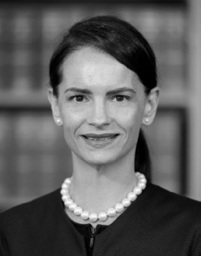
Chief Magistrate Louise Taylor
Louise Taylor was appointed Chief Magistrate of the ACT Magistrates Court on 1 May 2026. She was previously appointed as a Judge of the ACT Supreme Court in August 2023.
Chief Magistrate Taylor, a Kamilaroi woman, was the first Aboriginal woman in Australia to be appointed to a superior court. Prior to her appointment to the Supreme Court, she was appointed as a Magistrate and Coroner in 2018, following almost 2 decades of legal practice in the ACT. Her career included roles as a specialist family violence prosecutor and Deputy CEO of Legal Aid ACT.
Justice Taylor also served as Chair of the Women’s Legal Centre ACT Board for 10 years.

Chief Magistrate Lorraine Walker
Chief Magistrate Lorraine Walker holds a Bachelor of Arts and Laws from the University of Sydney. Her Honour was admitted as a solicitor in NSW in 1987, working briefly as an employed solicitor until joining the Royal Australian Air Force later that year. She served as a legal officer for 3 years in Melbourne and the Northern Territory before relocating to her birthplace – the United Kingdom.
Her Honour was employed by the Crown Prosecution Service as a prosecutor from 1990 to 1996. On returning to Australia, she practised as a solicitor in the ACT for one year before being made a partner in a national law firm. She started at the ACT Bar in 2000.
Her Honour was appointed to the ACT bench in 2010 with a dual commission as Coroner and Magistrate. She was subsequently appointed Chief Coroner and Chief Magistrate in 2011.
In August 2019, her Honour was appointed as an Acting Judge of the Supreme Court for 12 months to establish the ACT’s Drug and Alcohol Sentencing list but resumed as Chief Magistrate in April 2020, in light of the impact of COVID-19.

Philip Walker SC
Philip Walker SC was appointed to the Council as the legal practitioner representative in February 2023.
Philip was admitted as a barrister and solicitor in 1988. He worked at the ACT Government Solicitor from 1989 until 1998, ultimately as General Counsel. In 1998, he commenced private practice at the Canberra Bar in Blackburn Chambers.
Philip was appointed as Senior Counsel in 2013. He has extensive experience in public and commercial law. He has practical knowledge of both territory and federal legal practice. Philip is also a Military lawyer, with both disciplinary and inquiry experience.
Philip was the ACT Bar Association president from 2010 until 2012.
From 2018 to 2024, Philip was recognised in Doyle’s Guide as a leading Commercial Litigation and Dispute Resolution Barrister in the ACT.
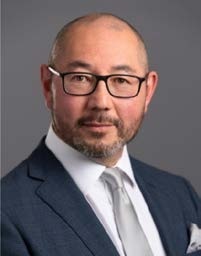
Rodney Lee Walsh
Rodney Lee Walsh, B.A.(Syd), LL.B, Dip.Leg.Prac.(Newc), was appointed to the Council as the community representative on 1 August 2025.
Rodney is a father of 4, an NDIS carer, and principal consultant with the Applied Edge Group – a Canberra-based consulting firm specialising in strategic planning, integrity and ethics education. He was a senior executive in the Australian Public Service for 16 years, including a decade with the Commonwealth and ACT Ombudsman, and is a leading authority in complaint investigation and dispute resolution.
Rodney maintains his connection with a broad cross-section of the Canberra community through his network of community martial arts schools, which operate across the ACT as well as in NSW, Victoria, Queensland and Western Australia. Working directly with people of all ages, backgrounds and abilities – including those from disadvantaged, multicultural and LGBTIQ+ communities, and people with disability or mental health conditions – Rodney aims to ensure that these lived experiences are reflected in all Council deliberations, communications and decisions.
The Principal Officer and supporting staff
The Council is supported by a Principal Officer. The Principal Officer is Iain Anderson. The Principal Officer and his staff are the point of contact for complainants. They facilitate communication between a complainant and the Council.

Iain Anderson, Principal Officer
Iain Anderson commenced his position as the Council’s Principal Officer on his commencement as Commonwealth and ACT Ombudsman on 1 August 2022.
Iain undertakes this role as one of his functions as the Commonwealth and ACT Ombudsman.
Before being appointed as Commonwealth Ombudsman, Iain spent 34 years working in
a variety of roles across a range of legal and social policy areas in 6 different Commonwealth departments and agencies, including practising as a government solicitor. He was admitted as a solicitor in NSW in 1990.
Iain holds a Bachelor of Economics and a Bachelor of Laws from the University of Sydney.